NFTs And The Future of Value
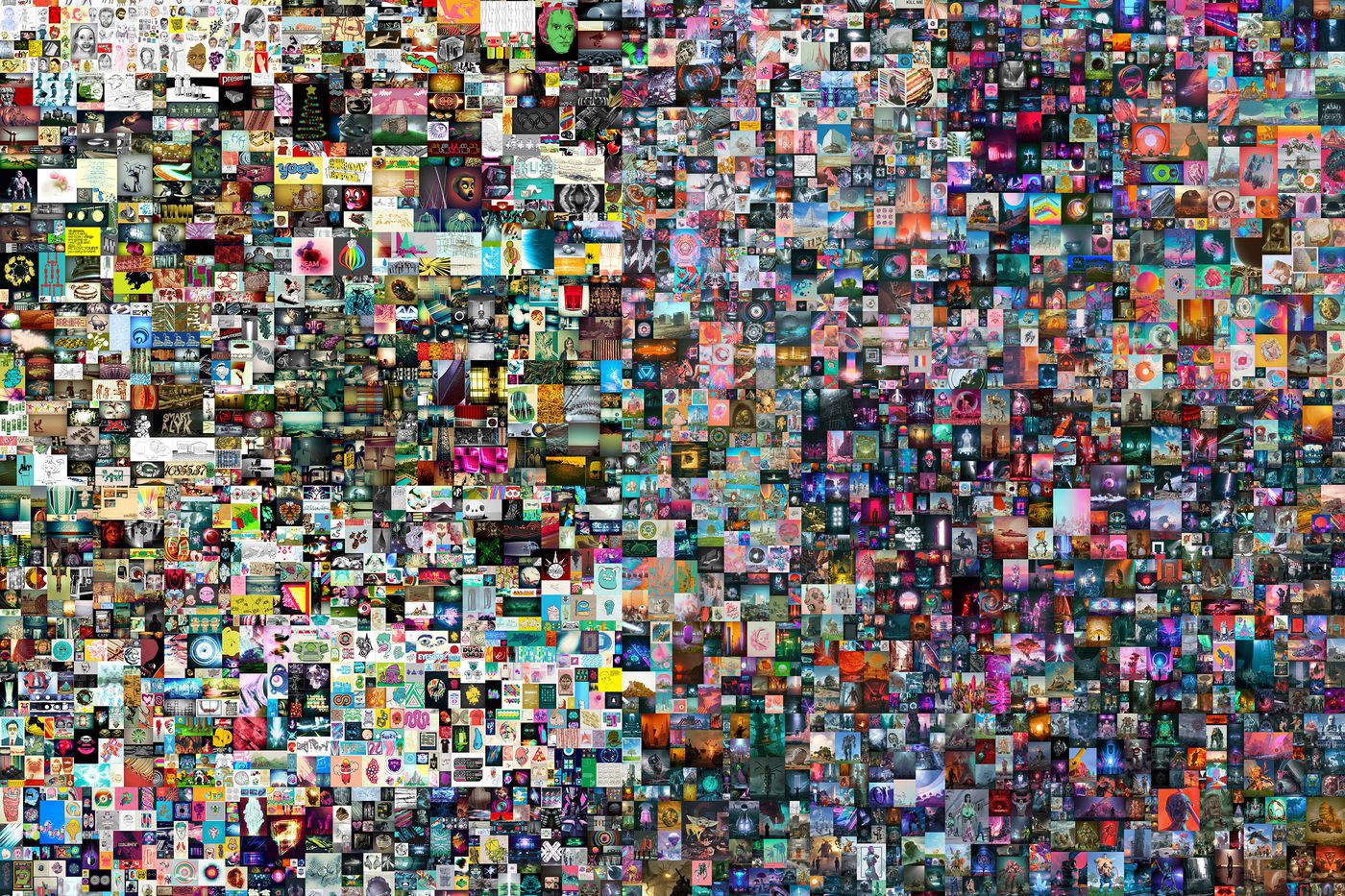
The Beeple NFT which was sold for USD 69 MN
The birth of Rock & Roll was a cultural flashpoint, wasn’t
it?
A loud, swashbuckling, and above all, intense form of music
that had anyone who wasn’t in on it wondering;
“Do we even know what music really is anymore?”
Take that same amazement, disbelief, and most important of
all, complete uncertainty on what a new concept really
means, and you might as well call NFTs this generation’s
cultural flashpoint of sorts. Just as AC/DC’s virulent
screeching had heads being scratched over what it meant, a
$600,000 NFT of a cat trailing rainbows has us all
dumbfounded. And it’s just going to get a whole lot more
complicated, before it gets any better.
Before we even think of understanding NFTs though, it’s
essential to dissect The Blockchain. Read any primer on
Cryptocurrency or NFT or even high security banking
transactions, they all tout the blockchain system as the
primary source of any secure traits these instruments may
have. And yet, paradoxically so, a simplified explanation of
how it all works is left upon the reader to find. We can
give that a shot here though.
Primarily, a Blockchain is code that involves multiple
components to ensure security. To put it as simply and
crudely as possible, the base component is a record, with
multiple records forming a block, and multiple blocks
forming the blockchain. Every block has a number denoted to
it, called hash. And whenever a block is “attached” to
another block, the new block’s hash number contains part of
the previous block’s hash number.
When a record is entered, say of a transaction, it forms
what the block is made of, and it’s what influences the hash
number. So when any minuscule change is attempted on the
record, that changes the hash number for the larger block.
Basically, the principle is that if the hash number has
changed, then it won’t tally up to the hash numbers further
down in the blockchain, and thus such changes won’t be
accepted.
Now, where NFTs come in, is in the fact that blockchain
technology is seen as far more secure than any other. A NFT
is a simple record of ownership, not much further off than a
certificate, that deems the holder as owner of a digital
work. It’s not that you own the work in the traditional
sense. Others can still view, download, and even use that
digital piece without your knowledge or consent. What you
have, is a digital equivalent of a stamped, attested paper
saying you own that work.
And all that is possible, and legitimized only through
blockchain tech. As mentioned before, since blockchain is
virtually tamper proof, digital records can be securely made
without concern of theft or otherwise. And at the base of
it, an NFT is just that. A single record, which is part of a
larger block, which will form a blockchain. What’s being
sold, is that single record.
The advent of this new instrument has certainly
revolutionized the art world, first and foremost. Where
digital art was scoffed at by the finely cultivated
gatekeepers of gallery curators, just because it’s
commercial viability was next to nil; NFT transactions have
legitimized what digital art is worth, both commercially and
culturally.
Cases like those of the digital artist Beeple selling an NFT
of his work for $70 million, all paid in bitcoin, have left
watchers dumbfounded. The first question becomes, what even
is the NFT? And when that’s answered, comes the next,
seemingly pragmatic follow up-
Why would you even pay that much for just a certificate?
That’s where a fundamental disconnect in our viewing comes
in. For the majority, any value, or lack thereof, in an NFT
is to be determined by its utility. Why pay for a painting
when I can’t even be the only one viewing it? Why pay for a
tweet which everyone else has already seen?
Is it posterity? Or do we boil it down to NFTs being nothing
more than collectibles, an indulgent playground for the rich
and their dealings?
The right answer seems to be that for now, NFTs are limited
to what our imagination allows them to be. Beyond just
certificates of digital memorabilia, their potential for
secure transactions when it comes to goods and services like
music, software, auctioning and more, has barely begun to be
tested. And surely, as the NFT further becomes mainstream,
our understanding of it will expand the potential for its
uses.
Even in the near future, pioneering changes are inevitable
when it comes to NFTs. Beyond the art world itself, which
has been the primary focus of this phenomenon, fields like
real estate are well-primed to revolutionize the way they
function. Where any real estate transaction is mired by the
unending drawl of agents, notaries, banks, attorneys, and
then the same all over again; NFTs can cut through the long
winding processes that characterize the industry right now.
Expenses, time-wise and monetary, keep adding up where
mediators are involved in transactions. With NFTs, quick
agreements made possible through the secure identification
and transfer of ownership can accelerate the property-buying
process. Even concepts like fractional ownership, often
complicated ventures that pose more obstacles than not, can
be eased with how NFTs function. The root of it all lies in
the fact that ownership records and rights are instantly
verifiable due to blockchain technology. In a procedural
system where latency adds up with long winded formalities
and processes, NFTs can possibly speed it all up tenfold.
For corporates and institutional banks, the challenge lies
in figuring out how to optimize an increasingly
decentralized system for their use case scenarios.
Traditional institutions can consider NFTs as a tool to
track financial assets, which might be inefficient or costly
to do with current methods.
Going beyond that, it would be remiss to ignore any
intersection of the creative economy and traditional
corporates and other institutions. Where so many corporate
undertakings work with creators and influencers, NFTs
present a new channel for ownership and distribution through
a marketing perspective.
And as said before, ownership is at the crux of how all of
this functions, and the possibilities it presents. For so
many setups, the distinction between employee and creator is
next to nil. And traditionally, ownership of employee’s
ideas and contributions has been limited to an equity based
model; aligning incentives with the success of the company.
As well as that model has worked for some, it’s
accessibility has been limited. NFT can change that, with
the possibility to make anyone who contributes, an owner of
their share of the work done.
What this presents is a concept where people won’t have to
be full-time employees to earn ownership in the value that
they provide to any platform and service. A fundamental
factor of innovation is due credit and ownership to induce
said innovation. NFTs are a way forward in that scenario.
With all the boundless potential that this phenomenon
presents, it’s easy to look to devote every aspect of future
progress to NFT and blockchain tech. To provide every idea
within the domain of how these concepts function.
But for now, for so many of us, fact remains that this
novel, gimmick-seeming instrument has made us question all
that we know of value. Where people pay in virtual currency
that is loyal to no Government, for a virtual record of
something that can be easily accessed by anyone else.
It’s the kind of reality warping phenomenon that makes you
wonder whether this is how the market, the economy, and the
world truly works. Whether this is really the next step, or
a short lived fad. And if no one understands it, can it
truly take hold? For now, NFTs raise more questions than
they can possibly answer.
But then again, AC/DC screaming Thunderstruck had their fair
share of doubters too, right?
Written by Debashish Dumbre.
